Walnuts in Confectionery: Chocolate Compatibility and Inclusion Preparation
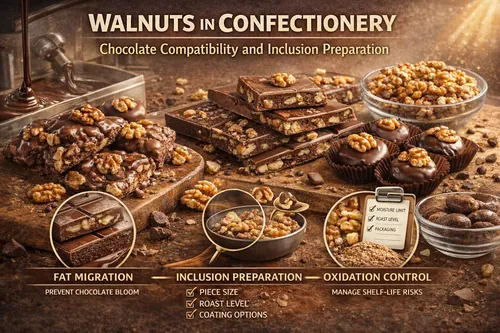
Industrial guide for walnuts in confectionery—how walnut format, roast, and handling affect chocolate compatibility, inclusion integrity, and shelf-life. Covers bloom and fat migration risk, prep methods (dry roast, coating, panning, enrobing), buyer spec checkpoints, packaging options, and common QA documentation.
Previous: Walnuts in Bakery (Breads, Cookies, Brownies): Roast Level and Water Activity • Next: Walnuts for Granola and Cereal: Crunch Retention and Packaging to Prevent Rancidity
Related: bulk walnut products • products catalog • request a quote
Where walnuts fit in confectionery lines
Walnuts are used across bars, clusters, barks, pralines, inclusions for molded pieces, and premium toppings. The “right” walnut is usually the one that delivers the target bite and flavor while staying stable in fat-based systems and surviving your process without excessive breakage or dusting.
- Inclusions in bars and clusters: controlled pieces for consistent distribution and depositor flow.
- Molded chocolates and pralines: smaller cuts to reduce voids and improve mold fill.
- Panned or enrobed items: whole or large pieces for premium appearance; tighter defect control matters.
- Confectionery coatings / inclusions blends: consistent roast and low dust/fines to reduce thickening and clumping.
Chocolate compatibility is mostly a shelf-life question: manage temperature exposure, oxygen/light, and inclusion preparation to reduce rancid notes and bloom risk.
Chocolate compatibility: the mechanisms that matter
In chocolate systems, walnuts can introduce two common risks: fat migration (oil movement into the chocolate matrix) and oxidation (rancid notes from exposure to oxygen/heat/light). Both show up faster when storage is warm, temperature-cycled, or when walnut surface area is high (small pieces, meal, paste).
1) Fat migration and bloom
Walnut oil can move into the chocolate over time and can contribute to surface changes (including bloom-like appearance), especially when combined with poor tempering, warm storage, or repeated temperature swings. Minimizing dust/fines, selecting the right piece size, and considering inclusion coatings can reduce the risk.
2) Moisture and texture interactions
Chocolate is low moisture. If walnut pieces are exposed to humid environments, they can lose crispness or pick up off-notes. Inclusions also carry fine particles; excessive fines can thicken chocolate during mixing and reduce flow.
3) Flavor carryover
Walnuts bring nutty, slightly tannic notes that can be excellent with dark chocolate but can read “bitter” in sweeter or milk chocolate systems if the roast is too light or if the walnuts are oxidized. Align sensory targets early.
Inclusion preparation: what changes line performance
Piece size and integrity
Controlled piece size improves depositor consistency and reduces segregation. Over-handling increases breakage and creates fines, which can raise viscosity in chocolate and increase dusting losses. If your line has high shear mixing, choose a slightly larger cut.
Roast profile (if applicable)
Roasting can reduce perceived astringency and boost aroma, but it also changes oxidation dynamics. If you buy roasted walnuts, define roast intensity (light/medium/dark or a profile window) and confirm lot-to-lot sensory consistency.
Optional coatings and barriers
Some confectionery programs use a light coating step (or pre-coated inclusions) to reduce oil migration, improve crunch retention, and limit dust generation. The best option depends on your equipment (panning/enrobing), labeling constraints, and desired texture.
When “clean” matters more than “pretty”
For premium visible inclusions, tighter defect and color limits reduce visual variability. For compound coatings and inclusion blends, the priority is often low fines, stable roast, and oxidation control.
Spec checkpoints buyers should confirm (confectionery-focused)
Typical checkpoints include moisture, size/cut specification, defect and color limits, roast profile (if applicable), and microbiological requirements aligned to your category. Confectionery programs often add a few practical checks:
- Cut/size tolerance: helps depositor flow and consistent piece count per unit.
- Dust/fines level: affects chocolate viscosity, mixing losses, and appearance.
- Defect/color limits: important for molded products where inclusions are visible on the surface.
- Oxidation posture: align sensory expectation and storage/transport conditions with finished shelf-life goals.
- Foreign material controls: critical for confectionery where hard foreign material is a high-risk complaint.
- Micro requirements: set targets consistent with your product type and your process (with/without a kill step).
Processing and shelf-life considerations
Walnuts are oxidation sensitive. Packaging, oxygen exposure, heat, and light can all reduce shelf life. For chocolate programs, stability often depends on storage temperature discipline and minimizing temperature cycling. If your distribution is warm or variable, tighten oxidation controls and consider higher-barrier packaging.
Packaging options for bulk walnut programs
Bulk programs commonly use lined bags/cartons for kernels and cuts, sealed bulk bags for meal/flour, and drums or totes for oils and butters. For confectionery, packaging choice should reflect your hold time and climate exposure.
- Pieces / kernels: lined cartons or bags; consider higher-barrier liners when storage windows are long.
- Meal / fine cuts: tighter seals and lower oxygen exposure generally matter more because surface area is higher.
- Roasted formats: confirm whether packaging and storage recommendations differ vs raw.
Share receiving constraints (pallet pattern, dock schedule, temperature limits) and any repack requirements early to avoid delays.
How to request a quote with fewer back-and-forths
Send: product + format (halves/pieces/meal), target cut size and fines tolerance, raw vs roasted (and roast level if applicable), defect/color limits, micro requirements, packaging preference, first order volume, annual forecast, destination, and timeline. If you have a spec sheet, include it—this is the fastest path to an accurate offer.
Next step
If you share your confectionery application (bar/cluster/molded/panned), target inclusion size, chocolate type (dark/milk/compound), storage/distribution conditions, and packaging preference, we can confirm common spec targets and the fastest supply lane. Use Request a Quote or email info@almondsandwalnuts.com.