Almonds in Chocolate and Enrobing Lines: Moisture, Bloom Risk, and Inclusion Prep
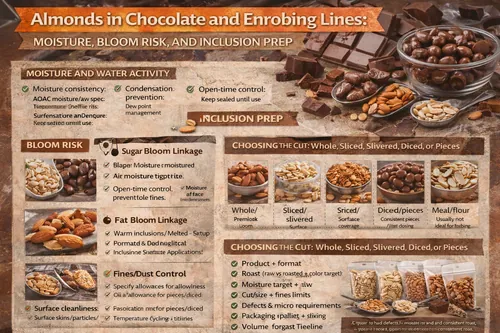
Almonds are a common inclusion in bars, clusters, and enrobed items—but chocolate systems are sensitive to moisture and fines. Small shifts in moisture or handling can trigger seizing, increase sugar bloom risk, or create coating defects. This guide outlines practical procurement and prep checkpoints to protect temper, flow, and finished appearance.
Previous: Almond Ingredients for Ice Cream and Frozen Desserts: Preventing Graininess • Next: Almonds for Cereal and Granola: Roast Level, Crunch Retention, and Shelf Life
Related: bulk almond products • products catalog • request a quote
Where almonds fit in chocolate and enrobing
Almond formats are used as:
- Center inclusions: whole almonds or large pieces inside bars, clusters, and molded items.
- Surface inclusions: diced/sliced/slivered nuts applied before/after enrobing.
- Crunch layers: small pieces blended into compound coatings or inclusions mixes.
Chocolate reality: moisture and condensation problems usually show up as “mystery” coating defects. Control moisture, temperature, and fines first.
Moisture and water activity: why chocolate is unforgiving
Chocolate and compounds are highly sensitive to water. Even small moisture pickup can:
- Cause seizing/thickening: free water or condensation can instantly wreck flow behavior.
- Increase sugar bloom risk: moisture dissolves surface sugar that later recrystallizes as bloom.
- Create adhesion issues: wet inclusions can “push off” chocolate or create voids at the interface.
Practical checkpoints:
- Inbound moisture consistency: tighter moisture control reduces drift in line behavior.
- Condensation prevention: avoid moving cold almonds into warm/humid rooms (dew point risk).
- Open-time control: minimize how long nuts sit exposed before dosing or enrobing.
Bloom risk: almonds can contribute indirectly
Bloom is often blamed on “temper,” but inclusions can amplify bloom risk by disturbing the system:
Sugar bloom linkage
- Moisture pickup from nuts or air
- Condensation events during changeovers
- Wet inclusions on surface applications
Fat bloom linkage
- Warm inclusions that locally melt/soften fat crystals
- Oil migration at interfaces (system dependent)
- Temperature cycling in storage/logistics
Quick win: keep inclusions and chocolate in the same temperature band and avoid “cold-to-warm” transfers that create condensation.
Inclusion prep: roast, cooling, and fines control
Inclusion prep is often the difference between a smooth enrobing day and a nightmare.
- Roast profile: confirm raw vs roasted; if roasted, align roast color/flavor to finished SKU and avoid overly dark roast that reads bitter.
- Cooling protocol: nuts should be cooled and equilibrated before use—warm nuts can soften coatings and promote bloom risk.
- Fines/dust control: fines can thicken coating, create rough surfaces, and reduce visual gloss. Specify allowable fines for diced/pieces.
- Surface cleanliness: broken skins, fragments, and dust can worsen appearance in molded and enrobed items.
Choosing the cut: whole, sliced, slivered, diced, or pieces
Select cut based on deposition method, finished appearance, and breakage tolerance.
- Whole almonds: premium look; validate size count and breakage limits.
- Sliced/slivered: great for surface coverage; validate thickness and breakage/fines.
- Diced/pieces: consistent dosing and distribution; specify screen size window and fines limits.
- Meal/flour: usually not ideal for enrobing environments unless intentionally used as a dusting layer—high thickening and dust risk.
Spec checkpoints buyers should confirm
For chocolate and enrobing lines, critical-to-quality tends to be moisture + fines, then roast/sensory and defects.
- Moisture target: set a tighter window if you’ve had seizing or bloom incidents.
- Cut/size spec: count/size for whole; screen window for pieces/diced; thickness for sliced/slivered.
- Fines limit: define allowable % below your minimum screen size.
- Roast profile: raw vs roasted; roast color target if applicable.
- Defect limits: foreign material, shells, chips, discoloration.
- Micro requirements: align to your category and risk posture.
- Documentation: COA, traceability, COO, certifications as required.
Processing and shelf-life considerations
Almonds contain oil and are oxidation-sensitive. In chocolate items, off-notes can hide early and then show up late in shelf life. Reduce rancidity risk by controlling oxygen, heat, and time-in-plant.
- Storage: cool, stable conditions; avoid temperature cycling.
- Handling: keep containers closed; limit staging time on the floor.
- Receiving checks: quick sensory/odor checks can prevent downstream flavor complaints.
Packaging options for bulk programs
Packaging should match your humidity exposure and how long product will be staged before use.
- Lined cartons/bags: common for whole and cuts; confirm barrier needs if you operate in humid environments.
- Re-pack: specify if you need smaller packs for fast usage and reduced open-time.
- Pallet constraints: share max height/footprint; confirm racking limits and dock setup.
Specs checklist (quote-ready)
To quote with fewer back-and-forths, include:
- Product: almonds for chocolate (whole / sliced / slivered / diced / pieces)
- Roast: raw vs roasted; roast color target if applicable
- Cut/size: count/size (whole) or screen window + fines limit (pieces)
- Moisture target: set tight if bloom/seizing has been an issue
- Defect limits: foreign material, shells, discoloration
- Micro requirements: as applicable
- Packaging: bag/carton + pallet constraints
- Volume: first order + forecast; delivery cadence
- Destination: city/state/country + required delivery window
- Documentation: COA, traceability, certifications if required
- Line notes: enrobing vs molding; surface vs inclusion; humidity/condensation sensitivities
If you’ve had defects, add: “critical-to-quality = low moisture pickup, low fines, and consistent roast” so the program can target tighter controls.
Next step
Share your chocolate process (molded vs enrobed), inclusion format (whole/sliced/diced), humidity controls, and whether you’ve seen seizing or bloom. We can recommend a practical cut spec, fines limit, and moisture targets to protect line performance. Use Request a Quote or email info@almondsandwalnuts.com.