Almonds for Cereal and Granola: Roast Level, Crunch Retention, and Shelf Life
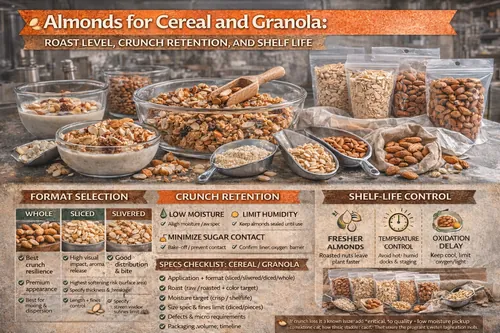
In cereal and granola, almonds must hold crunch under humid storage, sugar syrups, and fat systems—while keeping flavor stable through shelf life. This guide focuses on selecting the right cut and roast, protecting crispness, and managing oxidation risk in bulk almond programs.
Previous: Almonds in Chocolate and Enrobing Lines: Moisture, Bloom Risk, and Inclusion Prep • Next: Almond Meal for Meat Alternatives: Binding, Texture, and Label Considerations
Related: bulk almond products • products catalog • request a quote
Where almonds fit in cereal and granola systems
Almonds show up as:
- Inclusions: diced/pieces blended into granola or cereal clusters.
- Toppers: sliced/slivered almonds applied post-bake for appearance and aroma.
- Crunch components: roasted nuts in multi-component mixes (with seeds, crisps, fruit).
The two big failure modes are softening (loss of crunch) and flavor drift (oxidation). Design your spec around those first.
Roast level: balancing flavor, color, and stability
Roast is not just taste—it changes how almonds behave in your process:
- Flavor target: light roast reads “clean/nutty,” darker roast reads “toasted” but can turn bitter if pushed.
- Color consistency: visible inclusions (sliced/slivered) need tighter color tolerance.
- Oxidation sensitivity: roasted formats can be less forgiving if oxygen exposure and storage are weak.
Practical buyer note: define roast as raw vs roasted plus a simple roast/color target that QA can verify.
Crunch retention: what actually makes almonds go soft
Almond crispness degrades when water moves into the nut structure over time. Common drivers:
- High ambient humidity in staging or packing areas.
- Moist binders/syrups (honey, glucose, fruit concentrates) contacting almonds.
- Migration from inclusions (dried fruit, marshmallow, soft pieces).
- Packaging permeability that lets moisture creep in during distribution.
Fast win: keep almonds sealed until point-of-use and minimize “open time” on the floor—especially for sliced/slivered formats with more surface area.
Format selection: whole vs sliced vs slivered vs diced/pieces
Choose the cut based on your process step and the humidity exposure window.
- Whole almonds: best crunch resilience; premium appearance; validate size count and breakage limits.
- Sliced: high visual impact and aroma release; highest softening risk (surface area); specify thickness and breakage.
- Slivered: good distribution and bite; moderate softening risk; specify length window and fines.
- Diced/pieces: best for dosing and dispersion; manage fines to reduce dust and texture drift; specify screen window + fines limit.
Spec checkpoints buyers should confirm
For cereal/granola, the spec levers that most often protect texture and shelf life are moisture consistency, cut control, and oxidation controls.
- Moisture target: align to your process and crunch expectation; tighten window if softness complaints occur.
- Cut/size spec: count/size for whole; thickness for sliced; length for slivered; screen window for diced/pieces.
- Fines limit: especially for diced/pieces to avoid dust and inconsistent bite.
- Roast profile: raw vs roasted + roast/color target.
- Defect limits: foreign material, shells, chips, discoloration.
- Micro requirements: align to category and risk posture.
- Documentation: COA, allergen, COO, traceability, certifications if needed.
Processing and shelf-life considerations
Almond and walnut products are oxidation-sensitive; oxygen, heat, and light can all shorten shelf life. In cereal/granola, oxidation can read as “stale” or “painty” notes late in shelf.
- Storage: cool and stable; avoid temperature cycling and hot staging zones.
- FIFO discipline: don’t let roasted lots sit open or staged for long windows.
- Sensory checks: quick odor checks at receiving help catch issues early.
Packaging options for bulk programs
Granola and cereal plants vary widely in humidity control. If you fight crunch loss, packaging barrier matters.
- Lined cartons/bags: common for kernels and cuts; confirm liner and barrier expectations.
- Re-pack: smaller packs can reduce open-time and moisture pickup in humid rooms.
- Pallet configuration: share max height, wrap requirements, and receiving constraints early.
How to request a quote with fewer back-and-forths
Send the following and you’ll get a faster, tighter offer:
- Application: cereal vs granola; baked vs post-bake topper; inclusion vs surface
- Format: whole / sliced / slivered / diced / pieces
- Roast: raw vs roasted + roast/color target
- Size spec: count (whole) or thickness/length/screen window + fines limit
- Moisture target: and any special crunch-retention constraints
- Packaging: cartons/bags + re-pack needs + pallet constraints
- Volume: first order + annual forecast + delivery cadence
- Destination & timeline: location + desired ship/arrival window
- Documentation: COA, allergen, COO, certifications as required
If crunch loss is a known issue, add: “critical-to-quality = low moisture pickup, consistent cut, low fines, stable roast.” That steers the program toward tighter controls.
Next step
Share your cereal/granola process (baked vs post-add), the almond cut you prefer, and where softness shows up (immediate vs late shelf). We can recommend a practical cut spec, fines limit, and packaging approach that supports crunch retention. Use Request a Quote or email info@almondsandwalnuts.com.