Almonds • Roasted • Quote-ready specs • California sourcing

Bulk Dry Roasted Almonds

Atlas Nut Supply, LLC supplies bulk dry roasted almonds to manufacturers, brands, and distributors. We cooperate with multiple California suppliers to align the right roast level, form (whole vs pieces), size/count (as applicable), salt/seasoning, packaging, documentation, and delivery lane for your procurement.

Dry-roast programs are commonly specified by target color, flavor intensity, crunch, and oxidation expectations (to protect shelf-life).

Format
Dry roasted almonds
Programs
U.S. + global export
Support
COA • traceability • docs

Request a quote See spec snapshot Read applications

Fastest quoting: share roast level (light/medium/dark or target color), form (whole vs pieces), size/count (if whole), salt/seasoning needs, packaging, and destination (and port if export).

Unsalted Salted Seasoned blends Vacuum / nitrogen options Whole or pieces

Not sure what to specify? Tell us your end use (snacks, mixes, bars, inclusions, toppings) and we’ll recommend practical roast + packaging targets.
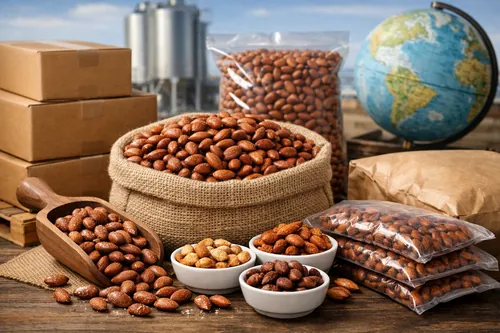
Bulk Dry Roasted Almonds for wholesale supply — Atlas Nut Supply

Spec snapshot (typical fields buyers request)

Final specifications vary by supplier program and destination requirements. Use this as a starting template for your QA and procurement teams.

Core product definition

Ingredient statement Almonds (optionally: salt and/or seasonings per program)
Process Dry roasted (validated lethality / pasteurization programs available; confirm method if required)
Forms Whole kernels; halves/pieces (cut size program dependent)
Sizing (whole) Count-per-ounce sizing (examples: 23/25, 25/27, 27/30, 30/34). Specify your preferred range.
Allergen Tree nut: almonds (segregation / allergen statements available on request)

If your product is going into retail packs or private label, include labeling constraints (ingredients, allergen statements, salt/sodium targets).

Quality + shelf-life controls

Roast profile Light / Medium / Dark or target color. Define taste notes (nutty vs deeper roast) and crunch expectation.
Moisture / flowability Set a max moisture target to reduce clumping and protect crunch (program dependent).
Oxidation targets Peroxide value (PV) and/or free fatty acids (FFA) targets (especially important for roasted products).
Foreign material Specify tolerance, metal detection expectations, and “may contain occasional shell fragments” handling language if needed.
Micro requirements Share your targets (e.g., Salmonella negative in defined sample size) and any finished-product testing frequency requirements.

For roasted nuts, packaging choices (oxygen barrier, vacuum/nitrogen) and storage temperature have a major impact on flavor stability and shelf-life.

Need a spec sheet in your format? Send your template (PDF/Excel) and we’ll map supplier program specs to your fields.

Dry roasted almonds options

Common program variables (availability varies by season and supplier program):

  • Roast level targets: light/medium/dark or target color + flavor intensity + crunch.
  • Form: whole kernels, halves, or pieces (define cut size and fines limit if applicable).
  • Size/count (whole): specify a count-per-ounce range to fit your application and cost target.
  • Salt/seasoning: unsalted, salted, or custom seasoning blends (ingredient restrictions and label needs supported).
  • Packaging: bulk bags/cartons; vacuum or nitrogen-flushed options where applicable; pallet constraints for your line.
  • Documentation: COA, traceability/COO, allergen statements; certifications by request (program dependent).

If you’re switching from oil-roasted to dry-roasted (or vice versa), tell us your texture + flavor target and shelf-life goal—we’ll recommend practical packaging and oxidation targets.

Industrial applications

Typical manufacturing and ingredient uses:

  • Snack and trail-mix manufacturing
  • Bars and inclusions (protein, nutrition, confectionery)
  • Bakery toppings and inclusions
  • Cereal / granola and foodservice programs

For deeper application guides, see the Atlas Nut Academy.

Roast profiles (buyer language)

  • Light: bright almond flavor, lighter color, crisp bite. Often used for inclusions/toppings where color matters.
  • Medium: balanced roast notes and crunch; popular for snack mixes and bars.
  • Dark: deeper roasted notes and darker color; useful when you want stronger flavor impact.

Tip: if you have a reference sample, share photos (or send the sample to your QA workflow) and we can align closer on color and flavor.

Packaging, logistics & export lanes

Roasted nuts are sensitive to oxygen, heat, and light. Packaging selection (barrier film, liners, vacuum/nitrogen) should match your shelf-life target and distribution conditions.

Common bulk pack formats

  • Cartons with inner liner: common for ingredient handling and warehouse stacking.
  • Multi-wall bags: used in some programs for manufacturing lines.
  • Pails / drums / totes: available in certain industrial programs for controlled handling.
  • Retail-ready packs: private-label options may be available via partner programs.

Tell us how you receive product (hand-add vs automated feed) and we’ll align packaging and pallet configuration accordingly.

Freshness protection options

  • Vacuum packed (program dependent)
  • Nitrogen flushed (program dependent)
  • Oxygen barrier liners and sealed inner bags

For export: share destination country, port, and required documentation (COO/health certificates, labeling language, pallet fumigation/ISPM where applicable).

If your lane experiences warm transit or long dwell times, ask about packaging upgrades and recommended storage conditions for your shelf-life goal.

Specs checklist (quote-ready)

Send your spec sheet if you have one. Otherwise, start with the checklist below for faster alignment.

  • Product: Dry roasted almonds
  • Form: whole kernels vs halves/pieces (include cut size, fines max, and breakage tolerance if relevant)
  • Roast profile: light/medium/dark or target color + flavor intensity + crunch
  • Size/count (if whole): preferred count-per-ounce range (e.g., 23/25, 25/27, 27/30, etc.)
  • Salt/seasoning: salted/unsalted; target salt level; seasoning profile; ingredient restrictions and label requirements
  • Moisture target: max moisture to protect crunch/flowability
  • Oxidation/rancidity expectations: PV/FFA targets and shelf-life goal (ambient vs refrigerated storage assumptions)
  • Micro requirements: Salmonella policy, indicator organism limits, and any lot testing expectations
  • Foreign material controls: metal detection expectations; tolerance language; “may contain occasional shell fragments” handling if needed
  • Packaging: bags/cartons/pails/drums/totes; vacuum/nitrogen preference; pallet constraints
  • Volume: first order + forecast and delivery cadence
  • Destination: city/state/country (and port if export)
  • Delivery window: required ship/receipt dates
  • Documentation: COA, traceability/COO, allergen statements, certifications if required

Share the end application and processing details and we’ll help confirm practical roast, packaging, and shelf-life targets for your lane.

FAQ: Dry roasted almonds

What specs do you need to quote bulk dry roasted almonds?

At minimum: roast level (light/medium/dark or target color), form (whole vs pieces), size/count if whole, salt/seasoning (if any), packaging, volume, destination, and timeline. If you have a spec sheet, share it; otherwise use the checklist above.

Do you offer salted or seasoned dry roasted almonds?

Often yes, depending on program. Share target salt level, seasoning profile, ingredient restrictions, and labeling requirements so we can align the right supply option.

What’s the difference between dry roasted and oil roasted almonds?

Dry roasting uses heated air/ovens without added oil, typically yielding a clean roast flavor and crisp texture. Oil roasting uses a food-grade oil medium and can deliver a different flavor and mouthfeel. If you’re matching an existing product, share a reference sample or target sensory notes and we’ll align the best program.

Do you ship dry roasted almonds outside the United States?

Yes. We support export lanes depending on destination, volume, and required documentation. Share the country/port and timeline for planning.

Can you provide COA and traceability documentation?

Yes. COA and traceability documentation are available per supplier program. If you require certifications (e.g., GFSI/BRCGS/SQF, organic, kosher/halal), note them in your inquiry so we can route you to the right program.

How should dry roasted almonds be stored for best shelf-life?

Storage guidance depends on the exact program and packaging. In general, keep sealed, cool, and dry; protect from heat, light, and oxygen exposure. If your shelf-life target is long or your lane is warm, ask about oxygen-control packaging (vacuum/nitrogen) and recommended storage temperature.

Can you match a target roast color and flavor?

Usually, yes—especially if you can provide target descriptors (light/medium/dark), a reference sample, or a color target. For high-volume programs, we can align to a repeatable roast window and packaging approach to keep product consistent lot-to-lot.