Walnut Orchard Management Basics: What Influences Kernel Quality
Buyer-focused crop guide: how orchard practices and harvest handling influence walnut kernel color, size, moisture, defect rates, storage performance, and the kind of specifications that QA teams can realistically hold.
Previous: California Walnut Varieties and Grades: Chandler and Other Programs • Next: Water Management in Walnuts: Yield, Size, and Defect Impacts
Related: bulk walnut products • products catalog • request a quote
Why orchard management matters to buyers
Walnut quality is “built” over a long season and then either protected—or damaged—during harvest and drying. The same grade name can perform very differently depending on (1) how the crop matured, (2) weather near harvest, and (3) how quickly and gently the nuts were handled after shaking.
Buyer reality: many defects don’t show up as a single issue—one weak link can cascade. Example: delayed drying + warm conditions can elevate mold risk and darken kernels, which then increases customer complaints even if the COA “passes.”
Understanding the orchard drivers helps procurement teams:
- Interpret offers during tight years (what’s “normal variability” vs a red flag).
- Set specs that match use-case risk (snack vs bakery vs inclusions vs nut butter).
- Plan buffers (timing, storage temperature, packaging, and inspection intensity).
Field-to-warehouse flow buyers should recognize
A simple map of the flow helps you ask better questions and spot where quality risk enters.
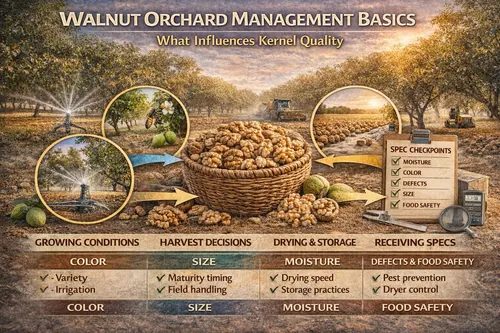
Orchard management → bloom/pollination → canopy and crop load → irrigation/nutrition → pest/disease pressure → maturity timing → harvest operations → in-field handling → hulling/shelling (program dependent) → drying → sorting/grading → warehousing → shipping.
The buyer-critical transition points are maturity timing, harvest handling, and drying. A strong season can be undone quickly if nuts sit wet/warm too long after harvest.
What in the orchard influences kernel quality (and how it shows up on COA/receiving)
1) Variety and orchard conditions
Variety and orchard conditions influence kernel color potential, size distribution, and shell integrity. Even within the same variety, orchard location, age, and vigor can shift average size and defect rates.
2) Pollination and crop load
Bloom conditions and crop load influence fill, size, and uniformity. Uneven set often leads to more variability: mixed maturity at harvest, broader moisture distribution, and higher sorting losses.
3) Canopy management (light and air movement)
Canopy structure affects humidity in the tree, disease pressure, and drying behavior after harvest. Denser canopies can correlate with more staining and quality variability depending on the year’s weather pattern.
4) Irrigation and nutrition
Water and nutrition practices influence yield, kernel fill, and how the crop finishes late season. From a buyer lens, this often shows up as shifts in average size, moisture at intake, and susceptibility to defects.
5) Pest and disease pressure
Insect damage, mold risk, and shell integrity issues are often downstream of pest/disease pressure and how well it was controlled. Your receiving inspection commonly picks this up as higher defect percentages, discoloration, and off-notes.
6) Weather near harvest
Weather at the end of the season can be decisive. Wet or unusually warm stretches raise the stakes on harvest scheduling, time-on-ground, and drying capacity. This is one reason two crop years with similar yields can have very different “usable” supply.
Harvest and drying: where many “quality surprises” come from
Buyers don’t need to run an orchard—but you do benefit from knowing which post-harvest choices reduce defect risk and improve storage performance.
- Harvest timing: too early can mean poor fill and higher moisture; too late can increase exposure and staining risk.
- Time before drying: long holds (especially warm/wet) can increase mold risk and darkening.
- Drying control: the goal is to reach stable moisture without over-drying or heat damage.
- Gentle handling: reduces breakage, excessive fines, and hidden damage that shows up later in customer complaints.
Procurement takeaway: when quality is tight, ask specifically about post-harvest flow: harvest window, time-to-dryer, dryer control practices, and how lots are segregated by quality.
Quality checkpoints that connect directly to procurement specs
Your spec sheet should mirror what you can validate in receiving and what your application actually needs. Typical checkpoints include:
Core receiving / COA items
- Moisture: key for storage stability and reducing mold risk.
- Defects: insect damage, mold, rancid/off, shrivels, dark pieces, foreign material.
- Grade / color: align to your product expectations (appearance and flavor).
- Size / count: important for inclusions, retail packs, and process consistency.
- Micro / food safety: required levels vary by category; define what you need.
Application-driven add-ons (often missed)
- Oxidation posture: packaging type (barrier, nitrogen flush), storage temperature expectations, and shelf-life target.
- Fines limit: particularly for inclusions/toppings where dust causes process issues and taste variability.
- Breakage tolerance: important for “piece identity” products and visual applications.
Storage, oxidation, and logistics
Even strong harvest quality can drift during storage if temperature, humidity, and oxygen exposure aren’t controlled. For buyers, the practical goal is simple: keep walnuts stable from pack date through your production window.
- Temperature control: cooler storage reduces oxidation rate and extends usable shelf life.
- Oxygen exposure: higher-barrier packaging and sealed cases reduce rancidity risk over time.
- Transit planning: long lanes + warm conditions increase risk—plan packaging and timing accordingly.
- Lot discipline: FEFO (first-expire/first-out) and lot traceability reduce internal surprises.
How to use this knowledge in buying decisions
If you are qualifying supply for a new SKU—or expanding volumes—treat crop-year timing as a planning input, not an afterthought. A simple approach that reduces surprises:
- Define “must-haves” vs “nice-to-haves” in specs (based on your end use).
- Validate documentation early (COA format, allergens, COO, micro requirements).
- Align PO timing with crop-year windows (availability, freshness posture, logistics lead time).
- Ask process questions (harvest window, time-to-dryer, storage conditions, packaging options).
- Set receiving checks that match risk (moisture verification, defect sampling plan, sensory check for oxidation).
Fast qualifier questions: What’s the crop year? How are lots segregated? What packaging and oxygen control options exist? What storage temperatures are used before shipment?
Next step
If you share your application (snack, bakery, confectionery, inclusions, nut butter) and the format you need, we can suggest common spec targets, packaging options, and the fastest supply lane for your program. Use Request a Quote or email info@almondsandwalnuts.com.